
Pomodoro technique for studying
The Pomodoro technique is a time-management method where you work on one task for a set block, traditionally 25 minutes, then take a short break of about five minutes, and take a longer break after every four blocks. For studying, it works best when each block has a specific, active task.
What most advice leaves out
Pomodoro is usually explained as a timer trick: work for 25, rest for 5. The timer helps you start and makes breaks guilt-free, but on its own it does nothing about what you do inside the block. Plenty of students sit through four perfectly timed blocks of rereading and remember little of it. The technique pays off when you decide in advance what each block is for, and when that task is something like answering questions or doing problems rather than looking at notes.
Step by step
- 1
Plan your blocks before the timer starts
List the tasks for the session and give each one or two blocks. "Block 1: ten questions on topic A. Block 2: check answers and redo the wrong ones." Planning first stops you wasting the start of each block deciding what to do.
- 2
Work on one task only
Start the timer and do only that task. If something else comes to mind, jot it down and carry on. Do not check messages until the break.
- 3
Take the break properly
When the timer goes, stop and step away from the desk for a few minutes: stretch, get water, look out of a window. Scrolling your phone often turns a five-minute break into twenty.
- 4
Take a longer break after four blocks
After about four blocks, rest for longer, around 15 to 30 minutes. This is where you can eat, check messages or go outside.
- 5
Adjust the timings to the work
Twenty-five minutes is a starting point, not a rule. Problem sets or essay planning may need longer blocks; heavy memorising may suit shorter ones. Keep whatever length lets you focus for the whole block.
Common mistakes
- Filling the blocks with rereading, so the timer is disciplined but the studying is passive.
- Starting the timer without deciding what the block is for.
- Spending breaks on the phone and struggling to come back to the desk.
Practise it with Migo AI Students
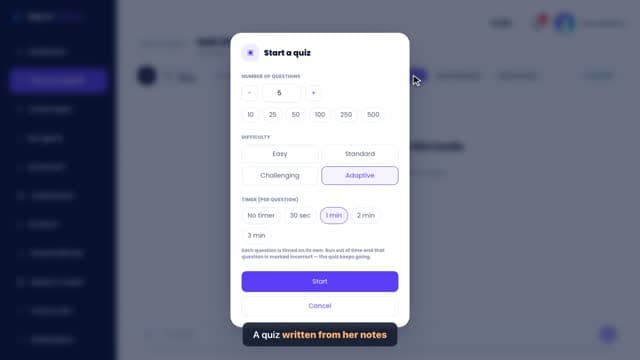
Migo does not have a Pomodoro timer, so use any timer you like. What it gives you is ready-made active tasks to put in each block. A Quiz Mode set from your study agent’s sources fits neatly into one block, with its own timer and explanations after you submit, and the next block can be spent fixing what you got wrong. A short Flashcards review works well as the first block of a day, and Exam Simulator can fill several blocks with a timed mixed session. All are free study modes.
Questions
Is 25 minutes the right length for studying?
It is the traditional length and a good place to start, but not a rule. Use the longest block you can stay fully focused for, and adjust it for different kinds of work.
What should I do in a Pomodoro break?
Something that rests your attention without pulling you into something else: move, stretch, drink water, look away from screens. Save messages and social media for the longer break.
Does Pomodoro work for long tasks like essays?
Yes, if you break the task into pieces that fit a block, such as planning one section or finding sources for one point. Longer blocks may suit writing better than very short ones.
Related guides
- How to concentrate while studyingTo concentrate while studying, give each session one specific task, remove your phone from the room, work in a fixed block with a planned break, and study actively by answering questions or explaining ideas rather than rereading. Passive reading is the easiest thing for the mind to wander away from.
- How to study for long hoursTo study for long hours, split the day into focused blocks with real breaks, switch between different kinds of tasks and topics, do the hardest work when you are most alert, and protect sleep, food and movement. Long hours only help if the time stays productive, so stop when your practice shows you are no longer taking things in.
- How to stop procrastinating when studyingTo stop procrastinating when studying, make the first step so small it is hard to refuse, such as answering three questions, start at a fixed time rather than when you feel ready, and remove the easy distractions before you begin. Procrastination is usually avoidance of an uncomfortable feeling, so lowering the cost of starting matters more than willpower.
General study advice. Follow your own course’s guidance and your institution’s rules on assessment and AI use.