
Interleaving study method
Interleaving is a study method where you mix different topics or types of problem within one session, for example alternating between three kinds of maths question, instead of practising one type many times in a row. It trains you to recognise which approach a question needs, which is what exams ask you to do.
What most advice leaves out
Most textbooks and worksheets are blocked: twenty questions on the same method in a row. By question five you know which method to use before you read the question, so you stop practising the hardest part, which is working out what kind of problem it is. In an exam, questions arrive mixed. Interleaving brings that choice back into practice. It feels slower and you make more mistakes along the way, which is easy to mistake for it not working. Those mistakes are useful: each one shows a pair of methods or ideas you have not yet learned to tell apart, and that is exactly the confusion that costs marks when questions are mixed in a real paper.
Step by step
- 1
Learn each topic on its own first
Interleaving is for practice, not first learning. Make sure you have a basic grasp of each method or topic before you start mixing them.
- 2
Choose related topics to mix
Mix topics that could be confused with each other, such as different types of equation, similar conditions, or related historical events. Mixing unrelated subjects is less useful.
- 3
Shuffle your practice questions
Instead of doing all the questions from one chapter, take a few from each of several chapters and put them in random order. Past papers are already mixed, so they are a ready-made interleaved set once you have covered the topics.
- 4
Identify the type before solving
For each question, first write down what kind of question it is and which method fits. Then solve it. That decision is the skill you are training.
- 5
Review wrong choices, not just wrong answers
When you get one wrong, check whether you picked the wrong method or made an error within the right one. They need different fixes.
Common mistakes
- Interleaving topics you have not learned yet, which just causes confusion.
- Giving up because mixed practice feels harder and slower than blocked practice.
- Mixing completely unrelated subjects in one session and calling it interleaving.
Practise it with Migo AI Students
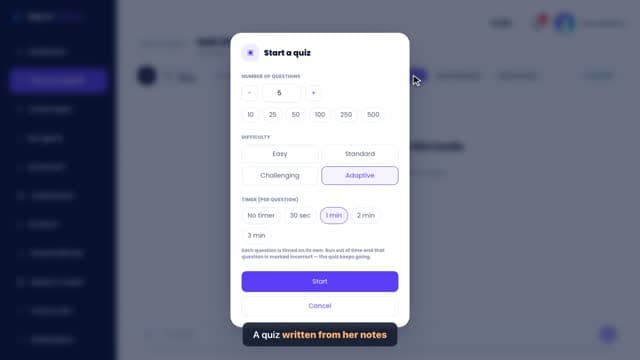
Exam Simulator mixes MCQs and short answers from your study agent’s sources into one timed session and gives a weak-topic report afterwards, which is interleaved practice by design. In Quiz Mode you can ask for a mixed set across several topics rather than one, and Flashcards from different topics can be reviewed in the same round. All free study modes.
Questions
What is the difference between interleaving and blocked practice?
Blocked practice does many questions of one type in a row. Interleaving mixes types, so you have to decide which method each question needs, as you do in an exam.
Does interleaving work for every subject?
It is most useful where you must choose between similar methods or ideas, such as maths, sciences, and telling apart similar conditions or concepts. It still helps elsewhere as mixed review.
How is interleaving different from spaced repetition?
Spaced repetition is about when you return to material, at growing intervals. Interleaving is about mixing topics within a session. They work well together.
Related guides
- What is spaced repetition and how do you use it?Spaced repetition is reviewing material at increasing intervals over time, with more frequent reviews for the things you find hard and less frequent ones for the things you know. It makes memories last longer than reviewing the same amount in one block.
- How to study maths effectivelyTo study maths effectively, spend most of your time doing problems yourself rather than reading worked solutions, make sure you understand why each method works, learn from every mistake, and practise mixed question types before the exam. Maths is learned by doing, not by watching it being done.
- How to use past papers to reviseUse past papers as practice under real exam conditions, mark them honestly, and then revise the specific things you got wrong before attempting another. A past paper is most valuable as a diagnosis, not just a score.
- How to make a study timetable for examsTo make a study timetable for exams, list every topic for each exam, rank them by how weak you are and how much they are worth, then put specific topics into the free time you actually have, with regular review sessions and buffer time. Revisit the timetable each week and change it based on what your practice shows.
General study advice. Follow your own course’s guidance and your institution’s rules on assessment and AI use.