
How to write a reflective essay
Write a reflective essay by briefly describing an experience, exploring what you thought and felt, analysing why it happened using theory or evidence, and saying what you learned and what you will do differently. Most of the marks are for analysis and learning, not description.
What most advice leaves out
Reflective writing confuses students because it breaks the usual rules: you write in the first person and your own experience is the subject. That freedom leads many to write a diary entry, a detailed story of what happened with a line about learning at the end. Markers are looking for the opposite balance. They want to see you question your own actions, connect them to theory or guidance from your course, and turn the experience into a specific change in how you work. Using a reflective model keeps that balance in place.
Step by step
- 1
Choose a specific experience
Pick one event or situation, not a whole placement or module. It does not have to be dramatic; ordinary moments with a clear lesson often work best.
- 2
Pick a reflective model
Use the model your course recommends, such as Gibbs’ reflective cycle or the “What? So what? Now what?” approach. A model gives the essay its structure.
- 3
Keep the description short
Give just enough detail for the reader to understand what happened. If your course involves real people, such as patients or clients, remove anything that could identify them.
- 4
Analyse with theory
Explain why things happened the way they did, linking your experience to theories, models, policies or evidence from your reading. This is where most marks are.
- 5
End with a specific plan
Say what you learned and exactly what you will do differently, and how. “I will communicate better” is vague; a concrete action is not.
- 6
Check the balance and the details
Reread the essay and check that analysis and learning take up most of the words, every theory you used is referenced in your course’s style, and nothing could identify anyone involved. If your experience involved a mistake or a serious incident, ask your tutor how to handle it in an assessment.
Common mistakes
- Spending most of the word count describing what happened.
- Writing about feelings without analysing them or linking them to anything.
- Leaving out theory and references because the essay is “personal”.
Practise it with Migo AI Students
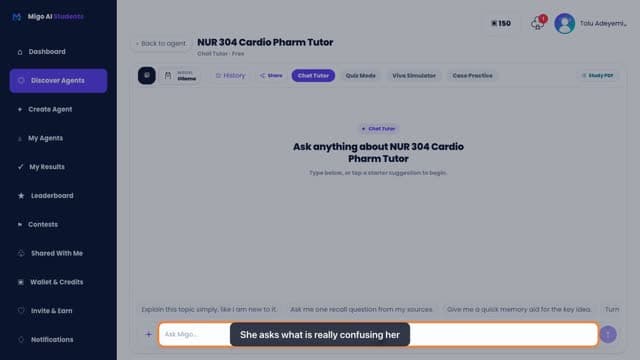
Your reflection has to be your own, and Migo will not write it. Chat Tutor can explain how a reflective model works, what each stage asks for, and the theories your course uses, then check you understand them with questions. Study Document lets you upload module reading on reflection as a PDF and work through it page by page. Both are free. Do not paste identifiable details about patients or clients into any AI tool.
Questions
Can I use “I” in a reflective essay?
Yes. Reflective writing is usually written in the first person because it is about your experience. Check your brief, but most courses expect it.
Do reflective essays need references?
Usually, yes. Linking your experience to theory and evidence is part of the analysis, and those sources should be referenced in your course’s style.
How do I make my reflection more critical?
Ask why at every stage: why you acted as you did, why it turned out that way, and what a theory or guideline suggests about it. Consider other people’s perspectives and what you would do differently, not only what went well.
Related guides
- Gibbs reflective cycleGibbs’ reflective cycle is a six-stage model for reflecting on an experience: Description, Feelings, Evaluation, Analysis, Conclusion and Action plan. It moves you from what happened to why it happened and what you will do differently next time. It was developed by Graham Gibbs and is widely used in nursing, health and education courses.
- How to write a nursing case studyWrite a nursing case study by introducing an anonymised patient and their background, working through their assessment, nursing diagnosis or problems, planned care, how it was carried out and how it was evaluated, and linking each decision to evidence, guidelines and your course’s nursing model. Finish with reflection on what you learned.
- How to structure an essayStructure an essay with an introduction that states your answer to the question, body paragraphs that each make one point supported by evidence and linked back to the question, and a conclusion that draws the points together. The argument, not the topic, should decide the order.
General study advice. Follow your own course’s guidance and your institution’s rules on assessment and AI use.