
How to write a conclusion for an essay
Write an essay conclusion by restating your answer to the question in light of the argument you made, drawing your main points together to show how they support it, and saying what follows from it. Do not add new evidence or simply repeat the introduction.
What most advice leaves out
Conclusions are usually written last, when time and energy are running out, so they become a quick summary that lists each paragraph again. That tells the marker nothing new. A strong conclusion does something the body could not: it weighs the points against each other and says what they add up to. The question to answer is “so what?”: why does your argument matter, and what does it mean for the question you were set? If you can answer that, the conclusion stops being a recap and becomes the end of an argument.
Step by step
- 1
Return to the question
Open by answering the essay question directly, using the wording of the question if it helps. The reader should not have to infer your final position.
- 2
Draw the threads together
Show how your main points combine to support that answer. Group them rather than listing every paragraph in order, and say which points carried the most weight.
- 3
Acknowledge the limits
If your answer depends on conditions, or the evidence is mixed, say so briefly. A qualified conclusion that is honest reads as stronger than an overconfident one.
- 4
Say what follows
End with the implication: what your answer means for practice, policy, theory or further study. Keep it tied to what you argued, not a new topic.
- 5
Cut anything new
Read the conclusion back and remove any new evidence, quotes or arguments. Quotes are evidence, and evidence belongs in the body; the conclusion is the place for your own voice. If something is important enough to include, move it into the body.
Common mistakes
- Copying the introduction with slightly different words.
- Introducing a new source or argument in the final paragraph.
- Ending with a vague line such as “more research is needed” without saying what research, or why.
Practise it with Migo AI Students
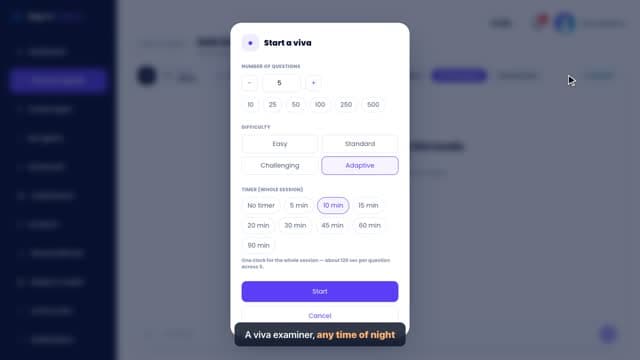
Migo does not write or rewrite conclusions. What it can do is help you work out what your argument adds up to. Chat Tutor can question you on the topic so you can explain your position in plain words, and Viva Simulator can ask you examiner-style follow-ups such as “why does that matter?”, with feedback on the points you missed. If you can answer those out loud, you have the material for a strong conclusion. Both modes are free.
Questions
How long should an essay conclusion be?
Usually similar in length to the introduction, so around a paragraph for most essays. Follow your course’s guidance; a conclusion that is much longer often contains material that belongs in the body.
Can I use “in conclusion” to start my conclusion?
It is not wrong, but it adds nothing because the reader can see it is the last paragraph. Starting with your answer to the question is usually stronger.
What is the difference between a summary and a conclusion?
A summary repeats what each part of the essay said. A conclusion judges what those parts add up to and answers the question. A short summary can be part of a conclusion, but it should not be all of it.
Related guides
- How to write an essay introductionA good essay introduction gives brief context, states your answer to the question in one or two clear sentences, and outlines how the essay will argue it. It should tell the marker where you are going, not try to cover the topic itself.
- How to structure an essayStructure an essay with an introduction that states your answer to the question, body paragraphs that each make one point supported by evidence and linked back to the question, and a conclusion that draws the points together. The argument, not the topic, should decide the order.
- Order of an essayThe usual order of an essay is: title, introduction, body paragraphs, conclusion, then the reference list, with appendices at the very end if you have any. Inside the body, put your points in the order that best builds your argument.
General study advice. Follow your own course’s guidance and your institution’s rules on assessment and AI use.