
How to answer essay questions in exams
Answer an exam essay question by reading it carefully for the command word and topic, spending a few minutes on a short plan with your answer and main points, then writing a focused essay that argues that answer with evidence, within the time you have allowed for it.
What most advice leaves out
Under exam pressure, many students see a familiar topic and start writing everything they revised about it. The result is a long, knowledgeable answer to a question that was not asked. Exam essays are marked on how well they answer the specific question, with a clear argument, in the time available. A few minutes of planning feels like lost writing time, but it is what keeps the answer focused, and it stops you running out of time on the last question.
Step by step
- 1
Split your time first
At the start, divide the exam time by the marks for each question and note a finish time for each. Leave a few minutes at the end to check.
- 2
Read the question twice
Underline the command word, such as discuss, evaluate, compare or explain, and the exact topic and limits. Note what the question is not asking.
- 3
Make a quick plan
Write your one-sentence answer, then three or four points that support it and one counter-argument. Put them in an order that builds your case. This should take only a few minutes.
- 4
Write to the plan
Open with a short introduction that states your answer. Give each point its own paragraph with evidence and a link back to the question. Finish with a brief conclusion.
- 5
Move on when time is up
When you reach your finish time, write a closing line and move to the next question. Starting every question usually earns more marks than perfecting one.
- 6
Prepare by planning past questions
Before the exam, practise planning answers to past questions in a few minutes each, write some full answers under timed conditions, and build a bank of evidence and examples for each topic that you can test yourself on.
Common mistakes
- Writing everything you know about the topic instead of answering the question.
- Skipping the plan and losing the thread halfway through.
- Spending too long on the first essay and rushing or missing the last one.
Practise it with Migo AI Students
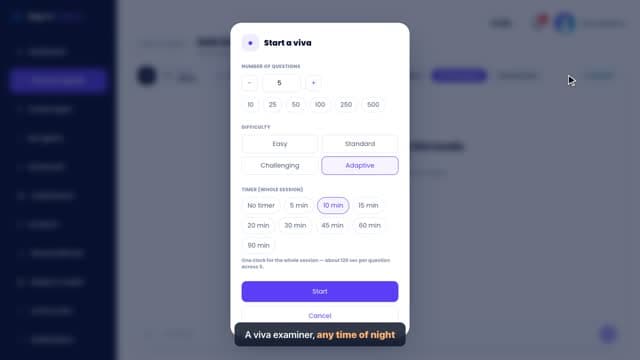
Migo does not mark full essays, but it can help you build the knowledge and the thinking. Quiz Mode and Exam Simulator test the facts and short explanations you need for evidence, with a weak-topic report. Viva Simulator asks you examiner-style questions on your material and gives feedback on the points you missed, which is good practice for forming an argument quickly. Chat Tutor explains anything the practice exposes. All are free study modes. Practise full essays on paper, timed, with past questions.
Questions
How long should I spend planning an exam essay?
A few minutes per essay is usually enough for a short plan. The aim is a clear answer and an order of points, not a detailed outline.
Should I memorise essays for exams?
Memorise key evidence, examples and arguments, not whole essays. A memorised essay rarely fits the question set, and markers can tell.
What should I do if I run out of time on an exam essay?
Write your remaining points as short, clear sentences or a brief list under a note saying you ran out of time, and finish with a one-line conclusion. Whether that earns marks depends on the marker, but it shows where your argument was going.
Related guides
- How to structure an essayStructure an essay with an introduction that states your answer to the question, body paragraphs that each make one point supported by evidence and linked back to the question, and a conclusion that draws the points together. The argument, not the topic, should decide the order.
- How to use past papers to reviseUse past papers as practice under real exam conditions, mark them honestly, and then revise the specific things you got wrong before attempting another. A past paper is most valuable as a diagnosis, not just a score.
- How to answer short answer questionsAnswer a short answer question by checking the command word and the marks available, then giving exactly what is asked: one clear, specific point for roughly each mark, using correct terms, with no padding. The marks tell you how much to write.
General study advice. Follow your own course’s guidance and your institution’s rules on assessment and AI use.